
As a Property or Facilities Manager, the appearance and integrity of your commercial building rest on your shoulders. But organising a full exterior clean often comes with a host of valid concerns: Will the work disrupt tenants? Is the contractor fully compliant with Health & Safety? What if the building’s facade is damaged? When it comes to the complex task of washing buildings, these aren’t just questions; they’re critical risks to manage, and finding a trustworthy partner is essential.
We understand these pressures. This guide was created to provide the clarity and peace of mind you need to make a confident, informed decision. Here, you will discover the most effective and safest cleaning methods for different surfaces, learn how a professional clean acts as preventative maintenance to protect your investment, and get expert advice on budgeting and choosing a reliable, fully insured contractor. Let’s ensure your property’s value and professional image are expertly protected.
Why Professional Building Washing is a Critical Investment, Not Just a Cost
As a property manager, you view every expenditure through the lens of return on investment. It’s easy to categorise exterior cleaning as a simple cosmetic cost, but this overlooks its crucial role in asset management. Professional building washing is a proactive strategy that protects your property’s value, enhances tenant satisfaction, and prevents significant future expenses. It’s not about spending money; it’s about investing in the long-term health and appeal of your commercial asset.
Attempting this task with in-house staff or amateur services often leads to property damage and safety risks. A professional team brings the right equipment, expertise, and insurance to deliver a flawless result while ensuring full compliance, giving you complete peace of mind.
Beyond Curb Appeal: Enhancing Your Brand Image
Your building’s facade is the first thing clients, visitors, and potential tenants see. A dirty, stained, or algae-covered exterior projects an image of neglect, which can directly impact public perception of the businesses within. A professionally cleaned building communicates quality, attention to detail, and success. This pristine appearance is a powerful tool for attracting and retaining high-quality commercial tenants who value a professional environment.
Protecting Your Asset: Cleaning as Preventative Maintenance
The grime on your building is more than just dirt. Organic growths like algae, moss, and lichen retain moisture and have root systems that can penetrate and damage surfaces over time. Similarly, pollutants from traffic and industry can cause irreversible staining and accelerate the degradation of materials like render, cladding, and brickwork. Regular, professional washing buildings removes these harmful contaminants. Experts use a range of specialised exterior cleaning methods to safely eradicate this build-up, preventing costly repairs that can run into thousands of pounds.
Health, Safety, and Compliance
A neglected exterior poses tangible risks. Algae and moss growth on pathways, steps, and car parks create serious slip hazards, exposing you to potential liability claims. Furthermore, mould and spores growing on walls can negatively impact the air quality for staff and visitors entering the building. Using a qualified and insured professional service ensures the job is completed safely and in accordance with UK health and safety regulations, protecting your tenants and your reputation.
Key Building Washing Methods Explained for Managers
Understanding the different techniques for washing buildings is crucial for any property manager. The right method protects your investment, while the wrong one can cause irreversible damage. A true professional never uses a one-size-fits-all approach. Instead, our specialists conduct a thorough assessment of your building’s materials, the type of soiling, and environmental factors before recommending a course of action. This ensures a safe, effective clean that enhances your property’s value and kerb appeal.
Here is a clear, non-technical overview of the primary methods we use to restore commercial properties.
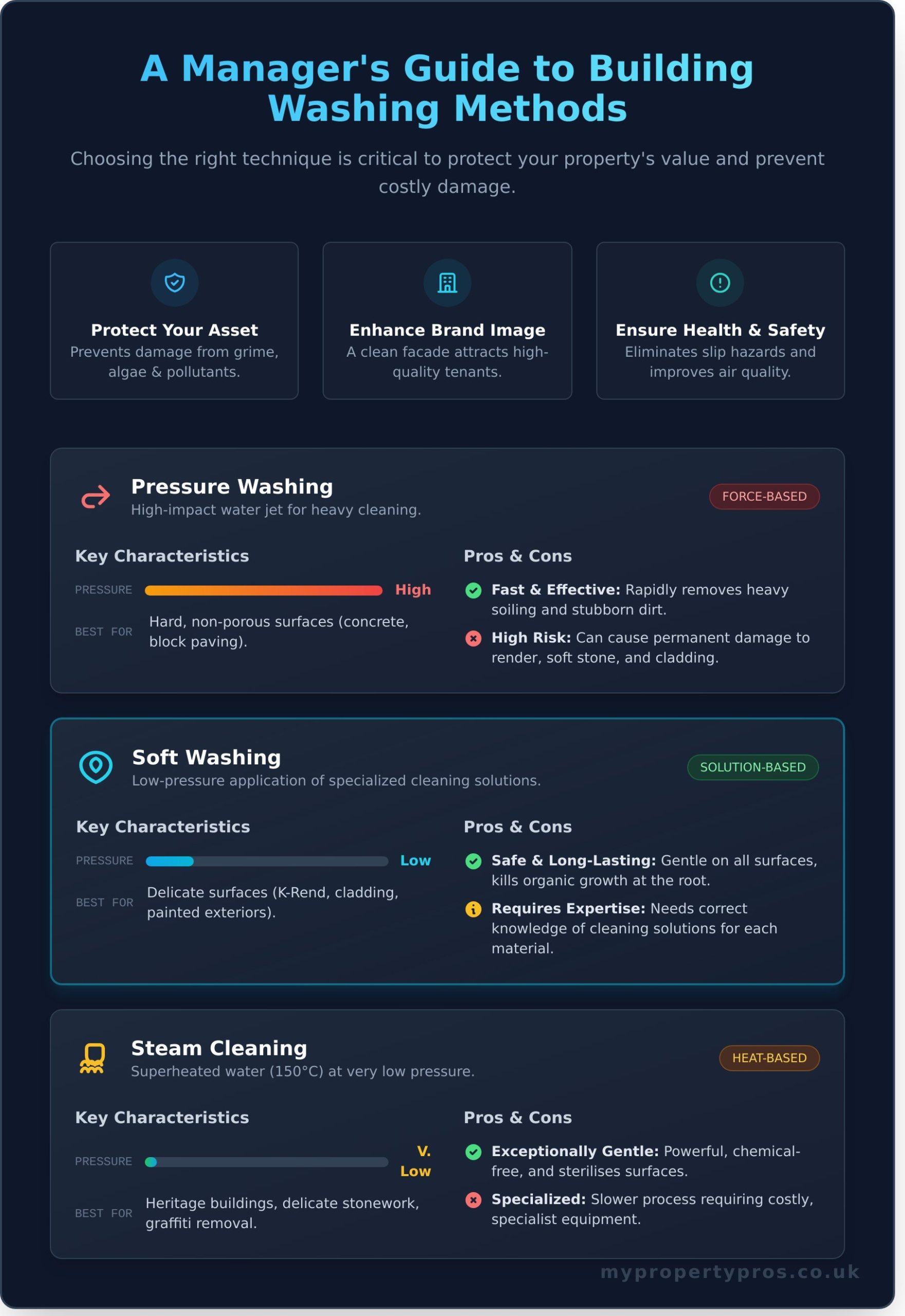
Pressure Washing (Jet Washing)
Pressure washing uses a high-pressure jet of water to physically blast away dirt, grime, and loose debris from durable surfaces. It is a powerful and effective method when used correctly. However, the sheer force can be highly destructive on the wrong material. Understanding the dangers of abrasive cleaning is what separates an expert from a liability, as incorrect use can etch stone, strip paint, and damage mortar.
- Best For: Hard, non-porous surfaces like concrete car parks, block paving, walkways, and robust modern brickwork.
- Pros: Extremely fast and effective for removing heavy, non-organic soiling and stubborn dirt.
- Cons: High risk of permanent damage to render, soft stone, cladding, and older brickwork. Can force water into the building’s structure.
Soft Washing
Soft washing is a modern, sophisticated approach that prioritises safety and long-lasting results. It uses specialised, biodegradable cleaning solutions applied at very low pressure-often no more than a garden hose. The solution does the hard work, breaking down dirt and, most importantly, killing organic growth like algae, moss, and lichen at the root. The surface is then gently rinsed, leaving it sanitised and clean.
- Best For: Delicate surfaces such as K-Rend, cladding, painted exteriors, and delicate or historic stonework.
- Pros: Safe for virtually all surfaces, treats the biological root of the problem for a longer-lasting clean, and prevents damage.
- Cons: Requires expert knowledge of cleaning solutions to ensure the correct application for each material.
Steam Cleaning (DOFF Systems)
This is a highly specialised technique that uses superheated water (up to 150°C) delivered at extremely low pressure. The heat melts away grime, paint, graffiti, and kills biological spores without the need for harsh chemicals or high-impact force. It is the preferred method for conservation and restoration work, trusted by heritage organisations for cleaning listed and historic buildings without causing damage.
- Best For: Heritage buildings, listed properties, delicate stonework, and removing stubborn contaminants like graffiti or paint.
- Pros: Exceptionally gentle yet powerful, chemical-free, and sterilises surfaces.
- Cons: A slower, more methodical process that requires specialised and costly equipment.
Matching the Method to the Material: A Building Surface Checklist
Applying the wrong cleaning technique to your building’s facade is more than just ineffective; it can cause irreversible damage and lead to costly repairs. A one-size-fits-all approach is a significant risk to your property’s value and structural integrity. At My Property Pros, our expert assessment begins with a deep understanding of your building’s materials. We believe that successful and safe washing buildings is a science, not a guessing game. This checklist provides a clear overview of the professional methods we employ for different surfaces.
Cleaning Modern Cladding, Render, and K-Rend
These delicate, modern finishes require a gentle touch. High-pressure jet washing can easily etch, crack, or strip the surface, forcing water into the building’s cavity and causing damp. The industry standard is soft washing. This method uses low-pressure application of specialist, pH-neutral cleaning solutions and biocides to kill organic growth like algae, lichen, and moss at the root. It effectively treats the cause of the staining-those familiar green and red streaks-without damaging the render, ensuring a lasting clean and protecting your investment.
Washing Brickwork and Stone Facades
Not all masonry is created equal. Hard, modern engineering brick can withstand more intensive cleaning than soft, porous historic sandstone or limestone. For older or listed buildings, our specialists often use superheated steam cleaning systems (like DOFF or TORC) which remove decades of grime, carbon staining, and paint without abrasives or high pressure. Our approach aligns with established conservation principles, such as the NPS guidelines on masonry cleaning, which advocate for using the gentlest effective method to preserve the material’s integrity for years to come.
Special Considerations for Glass, Metal, and UPVC
A comprehensive building wash addresses every component of the facade for a uniformly clean appearance. Our qualified teams are equipped to handle:
- Glass Curtain Walls: We use water-fed pole systems with purified water for a streak-free finish on large glass surfaces, safely from the ground where possible.
- Metal Panels: Faded powder-coated or anodised aluminium cladding can often be restored, reviving the building’s appearance without the expense of replacement.
- UPVC and Guttering: We ensure window frames, sills, fascias, and soffits are cleaned as part of the service, providing a complete and professional result.
The Professional Building Washing Process: What to Expect
At My Property Pros, we understand that commissioning a professional service for washing buildings can feel like a major undertaking. That’s why we’ve developed a transparent, structured process designed to deliver outstanding results with minimal disruption to your business. We manage every detail, giving you complete peace of mind from our first conversation to the final sign-off.
Step 1: The Site Survey and Risk Assessment
Our process begins not with a guess, but with a thorough on-site evaluation by one of our expert surveyors. During this visit, we meticulously assess every factor to ensure a safe and effective clean. This includes:
- Identifying all surface materials (brick, cladding, render, glass) to select the correct cleaning methods.
- Assessing the type of soiling, from organic growth like algae to traffic pollution.
- Evaluating access requirements, water sources, and potential public-facing challenges.
From this, we produce a comprehensive Risk Assessment and Method Statement (RAMS). This crucial document outlines exactly how we will work safely and efficiently on your property, ensuring full compliance. Your detailed, no-obligation quote is based on this expert assessment, so you know exactly what to expect.
Step 2: Scheduling and Minimising Business Disruption
We know that business continuity is your top priority. Our team works with you to create a cleaning schedule that fits seamlessly around your operations. We offer flexible options, including out-of-hours, weekend, and overnight work, to ensure our presence goes unnoticed by your staff, customers, or tenants. We establish clear communication protocols, keeping you informed at every stage and coordinating with your on-site team to manage access to different areas of the building methodically.
Step 3: The Day of the Clean and Post-Clean Inspection
On the scheduled day, our fully insured and qualified team arrives on time and in uniform. The first task is to secure the work area, setting up professional safety cordons and signage to protect the public and your property. Our specialists then carry out the clean using the agreed methods and specialist equipment. Once the work is complete, we don’t just pack up and leave. We conduct a final walk-through with you or your designated representative to inspect the results and ensure you are 100% satisfied with the transformation before we sign off the project.
Ready for a hassle-free process? Get your professional site survey.
How to Choose a Reliable Commercial Cleaning Partner
Selecting a contractor for washing your commercial building is more than a simple transaction; it’s an investment in your property’s value and public image. The right partner protects your asset, while the wrong choice can lead to damage and liability. To ensure you make a confident decision, use this checklist to vet potential contractors and identify a truly professional service provider.
Essential Credentials: Insurance and Accreditations
Before any work begins, verifying a contractor’s credentials is non-negotiable. This protects your business, your property, and everyone on-site. A reliable partner will readily provide proof of:
- Public Liability Insurance: This covers the cost of damage to your property or injury to a member of the public caused by their work.
- Employers’ Liability Insurance: This is a legal requirement in the UK and covers their team in case of an accident.
- Industry Accreditations: Look for certifications like SafeContractor or CHAS. These demonstrate a verified commitment to health and safety standards.
Always ask for copies of these documents. A professional company expects this and will provide them without hesitation.
Evaluating Their Expertise and Equipment
Effective building washing requires more than just a pressure washer. A key red flag is a company that offers a single, one-size-fits-all solution. Different building materials-from historic stonework to modern cladding-require specific techniques. Ask potential contractors about their methods. A true expert will assess your building’s surfaces and recommend the appropriate approach, whether it’s low-pressure soft washing, steam cleaning, or controlled pressure washing. Their investment in professional, well-maintained equipment is a clear indicator of their commitment to quality and safety.
Reviewing Case Studies and Testimonials
A proven track record is your best guarantee of future performance. Ask to see a portfolio of their work, specifically looking for projects on commercial properties similar to yours. This demonstrates relevant experience in washing buildings of a comparable scale and material. Beyond the company’s own website, check for genuine reviews on third-party platforms like Google. For complete peace of mind, don’t be afraid to ask for references from other property managers they have worked with. A trustworthy contractor with a history of satisfied clients will be happy to connect you.
By prioritising these criteria, you move beyond finding a simple service and instead establish a partnership with a team dedicated to maintaining your property’s integrity. At My Property Pros, we believe in this transparent, professional approach, ensuring your property is always in expert hands.
Protect Your Asset with Professional Building Washing
As a property or facilities manager, you understand that your building’s exterior is a direct reflection of your standards. This guide has shown that professional cleaning is a critical investment in your property’s longevity and value, not simply a recurring cost. Choosing the correct cleaning method for each surface is essential to prevent damage, and partnering with a true expert ensures the entire process is managed safely and efficiently.
The process of washing buildings demands a level of expertise and equipment that only seasoned professionals can provide. At My Property Pros, our UK-wide national franchise network is comprised of fully insured and accredited specialists. We use specialised equipment to deliver outstanding results on all building surfaces, giving you complete peace of mind. Ready to see the difference a professional clean can make? Request a Professional Site Survey & Quote for Your Property today.
Let our trusted team restore your building’s appeal and protect your valuable asset for years to come.
Frequently Asked Questions About Washing Buildings
How often should a commercial building be washed?
We recommend a professional clean at least once a year to maintain your building’s appearance and structural integrity. However, this can vary. Properties in high-traffic city centres or near industrial zones may require washing every six months due to higher pollution levels. The type of facade and your business operations also play a role; for example, a restaurant exterior will need more frequent attention than a standard office block. Our experts can advise a suitable schedule for your specific property.
What is the difference between commercial pressure washing and soft washing?
The primary difference lies in the pressure and the cleaning method. Commercial pressure washing uses high-pressure water to physically blast away dirt and grime. It’s highly effective for durable surfaces like concrete pavements and brickwork. Soft washing, however, uses low-pressure water combined with specialised, biodegradable cleaning solutions to treat and remove organic growth like algae and mould. It is the safest and most effective method for more delicate surfaces like render, cladding, and stonework.
Are the cleaning solutions used in building washing safe for the environment and landscaping?
Absolutely. As a professional and responsible company, we exclusively use biodegradable, eco-friendly cleaning solutions that are safe for the environment. Our qualified technicians are trained to protect your property’s surroundings. This includes pre-saturating all nearby plants and landscaping with fresh water, covering delicate vegetation where necessary, and carefully managing all water run-off. Your peace of mind and the protection of your assets, including your landscaping, are our top priorities.
How is the cost of washing a large commercial building calculated?
The cost of washing a large commercial building is calculated based on several key factors. These include the total square meterage of the surfaces to be cleaned, the height and accessibility of the building, the specific cleaning method required, and the extent of the dirt, algae, or staining. For an accurate and transparent quote, typically starting from a few hundred pounds (£) and increasing with complexity, we always conduct a thorough on-site survey to assess your property’s unique needs.
Can you clean high-rise buildings and what access equipment do you use?
Yes, we are fully equipped and qualified to clean high-rise buildings safely and efficiently. Our specialist teams use a range of industry-leading access equipment depending on the building’s height, design, and location. This includes Mobile Elevating Work Platforms (MEWPs) such as cherry pickers and scissor lifts, advanced rope access techniques (abseiling) for hard-to-reach areas, and fixed scaffolding for extensive projects. All our operators are fully trained and certified to ensure maximum safety and compliance.
What is included in a standard risk assessment for building washing?
A standard risk assessment is a critical safety document, compliant with UK Health and Safety Executive (HSE) regulations. It identifies all potential hazards, such as working at height, risks to the public, chemical handling, and proximity to power lines. We then detail specific control measures to mitigate these risks while washing buildings. This includes cordoning off the work area, use of appropriate Personal Protective Equipment (PPE), and ensuring all operatives hold the relevant certifications for access equipment.