
Does your home’s once-pristine render look tired, stained, and dull? Stubborn green algae, unsightly red streaks, and layers of built-up grime can spoil your property’s kerb appeal, but tackling the problem often feels daunting. You might be worried about using a high-pressure washer that could blast away more than just the dirt, or choosing chemicals that might cause permanent, costly damage.
We understand these concerns completely. Knowing how to clean rendered walls correctly is the key to restoring your home’s bright, clean appearance without the risk. In this expert guide, we provide clear, step-by-step instructions for every situation. You will learn gentle DIY techniques for routine maintenance as well as when to call on professionals for a deep, long-lasting soft wash treatment that safely eliminates mould and algae. Get ready to bring your home back to its former glory with total peace of mind.
Key Takeaways
- Before starting any work, it’s crucial to identify your render type to prevent causing irreversible and costly damage during cleaning.
- Discover why using a high-pressure washer on render is a common mistake and learn the safe, low-cost DIY methods for tackling light dirt and grime.
- For deep-set stains and organic growth, understanding how to clean rendered walls with professional soft washing is the key to a safe and long-lasting result.
- Learn simple but effective maintenance strategies to keep your render looking fresh after cleaning and inhibit the future growth of algae and mould.
First, Assess Your Walls: Identifying Render Type and Stains
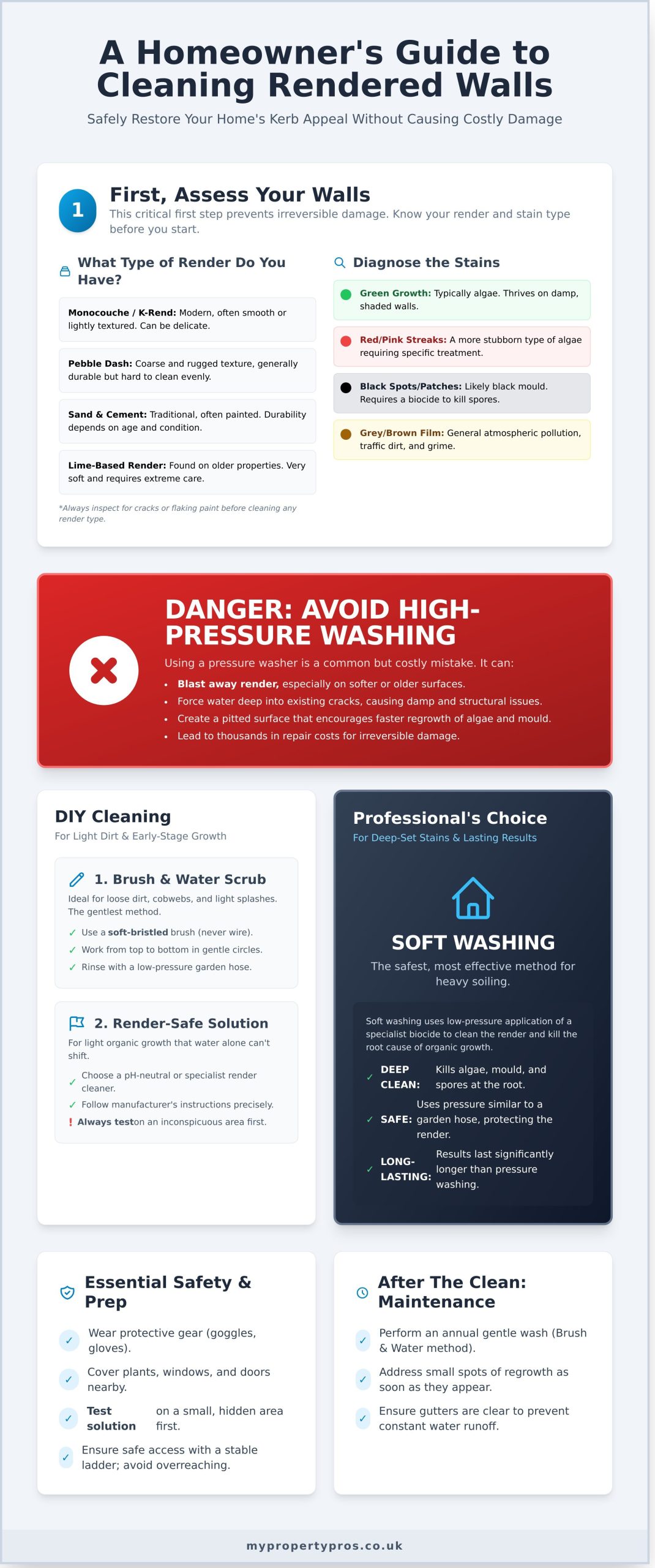
Before you begin cleaning, taking the time to properly assess your property’s exterior is the most critical first step. Applying the wrong cleaning method or pressure can lead to irreversible damage, turning a simple task into a costly repair. Understanding exactly what you’re working with-from the render material to the type of stain-is the foundation of learning how to clean rendered walls safely and effectively, ensuring you restore your home’s kerb appeal without causing harm.
What Type of Render Do You Have?
The exterior finish on UK homes varies significantly, and each type requires a specific approach. Common renders include modern Monocouche and K-Rend, traditional pebble dash, and sand and cement. The texture is a key indicator of its durability; smoother finishes are often more delicate than coarse, rugged ones like pebble dash. Understanding what rendered walls are made of reveals why some are more porous and delicate than others. Before cleaning, carefully inspect for existing damage like fine cracks or flaking paint, as forcing water into these flaws can cause serious issues. Older properties with lime-based renders are particularly soft and demand the gentlest cleaning methods.
Diagnosing the Stains: Algae, Mould, or Grime?
Different types of discolouration demand different treatments. Identifying the culprit correctly ensures you use a solution that works the first time, preventing wasted effort and potential damage from repeated cleaning attempts. Here’s a quick guide:
- Green Growth: This is typically algae, which thrives on damp, shaded walls, especially north-facing elevations.
- Red or Pink Streaks: A different and often more stubborn type of algae that requires a specific treatment to remove effectively.
- Black Spots or Patches: This is likely black mould. It requires a proper biocide to kill the spores, as simply washing the surface will not solve the underlying problem.
- Grey or Brown Film: Usually a build-up of general atmospheric pollution, traffic dirt, and grime that settles on the surface over time.
Essential Safety and Preparation Checklist
Proper preparation is non-negotiable for a safe and professional result. This checklist is a crucial part of how to clean rendered walls without incident or damage to your property.
- Always wear protective gear, including safety goggles, waterproof gloves, and suitable clothing to protect your skin and eyes from cleaning solutions.
- Cover nearby plants, windows, and doors with plastic sheeting to shield them from chemical splashes and runoff.
- Test any cleaning solution on a small, inconspicuous area first. This vital step allows you to check for any adverse reactions like discolouration before applying it to the entire wall.
- Ensure you have safe access for higher areas. If using a ladder, make sure it is stable and secure, and always avoid overreaching.
DIY Cleaning Methods for Light Dirt and Early-Stage Growth
If your rendered walls are only showing minor signs of discolouration or a light build-up of everyday grime, a gentle DIY approach can often be highly effective. These methods are designed for regular upkeep to maintain your property’s appearance, not for tackling heavy, ingrained staining which requires professional intervention.
The key to success is using minimal physical force and mild cleaning agents. This approach is fundamental to property care; historic building preservation experts advise using the gentlest means possible to protect the surface from unnecessary damage. Always start with the simplest method first before considering stronger solutions.
Method 1: The Simple Brush and Water Scrub
This is the ideal starting point for removing surface-level contaminants and is often all that’s needed for an annual clean. It’s the most straightforward way to clean rendered walls and carries the lowest risk of damage. This method is best for:
- Loose surface dirt and dust
- Cobwebs and insect nests
- Light, recent mud splashes
To do this correctly, use a soft-bristled brush-never a wire brush, as it will scratch and gouge the render. Working from the top of the wall downwards, scrub gently in circular motions. Once you have loosened the dirt, rinse the entire surface with a low-pressure garden hose, ensuring all debris is washed away.
Method 2: Using a Render-Safe Cleaning Solution
When plain water isn’t quite enough to lift light organic growth or more persistent dirt, a specialist cleaning solution is the next step. It is vital to choose the right product to avoid harming the render. Head to a UK DIY store and look for a pH-neutral or specialist render cleaner specifically formulated for this purpose.
Crucially, avoid using household bleach. While it may seem like a quick fix, its high alkalinity can cause permanent yellowing, strip colour from pigmented render, and damage the material’s integrity over time. For a safe and effective clean, apply your chosen solution with a low-pressure garden sprayer or a soft brush, and always follow the manufacturer’s instructions for dwell time before rinsing thoroughly.
The Dangers of Pressure Washing Rendered Walls
When searching for how to clean rendered walls, you will undoubtedly find suggestions to use a pressure washer. While effective for hard surfaces like patios, using high-pressure water on render is one of the most common and costly mistakes a homeowner can make. Unlike solid paving stones, render is a relatively soft, porous finish designed to protect your home. Aggressive cleaning can cause permanent damage that is expensive to repair and can lead to more serious structural issues down the line. Understanding these risks is the first step to protecting your property’s exterior.
How High Pressure Causes Irreversible Damage
A powerful jet of water can do more than just clean; it can inflict serious and lasting harm on your home’s protective layer. The damage is often not immediately obvious but can compromise the integrity of your walls, leading to repairs costing thousands of pounds.
- Strips the Surface: It can easily blast away the top layer of the render, leaving behind unsightly ‘tiger stripes,’ lines, and patches that permanently alter the texture and colour.
- Forces Water Ingress: High pressure forces water deep into any existing hairline cracks. This trapped moisture can lead to internal damp and, during colder UK winters, cause ‘frost spalling’ where the water freezes, expands, and breaks the render apart from within. This is why professional guides on Assessing Cleaning and Water-Repellent Treatments always emphasise understanding the material’s condition before starting.
- Dislodges Finishes: For textured surfaces like pebble dash, a pressure washer can dislodge the aggregate, leaving bald patches that are impossible to repair seamlessly.
- Spreads Algae and Mould: Rather than killing organic growth, a high-pressure spray often just blasts mould and algae spores across a wider area, encouraging them to grow back faster and thicker.
When to Absolutely Avoid a Pressure Washer
While a very low-pressure, wide-fan nozzle may be used by professionals in a process known as soft washing, you should never use a standard domestic pressure washer on your render if:
- Your render is painted, as it will almost certainly strip the paint in patches.
- You can see any existing cracks, flaking, or ‘blown’ areas where the render has detached from the wall.
- You live in an older property with traditional, breathable lime render, which is much softer than modern cement renders.
- Your machine does not have a variable pressure control that can be set to a very gentle level, or if your only attachment is a narrow, high-power ‘jet’ nozzle.
The Professional’s Choice: Soft Washing for a Deeper, Safer Clean
While pressure washing might seem like a quick fix, it can cause irreversible damage to delicate render, forcing water into cracks and stripping away the surface. For moderate to heavy staining from algae, mould, or pollution, the industry-standard solution is soft washing. This professional technique prioritises a gentle, chemical-based treatment over brute force, ensuring a deep clean that protects your property’s exterior and delivers results that last.
It is the definitive answer for homeowners asking how to clean rendered walls safely and effectively when DIY methods are not enough.
What is Soft Washing and How Does It Work?
Soft washing is a highly effective, low-pressure cleaning method. Instead of blasting dirt away, a specialised, government-approved biocide is applied to the render at a pressure similar to a garden hose. This professional-grade solution is left to dwell on the surface, where it works to kill the spores of algae, lichen, and mould at their root. Finally, the wall is gently rinsed with clean water, washing away the dead organic matter and accumulated grime to reveal a pristine finish.
Key Benefits of Professional Soft Washing
Choosing a professional soft washing service gives you complete peace of mind. The key advantages include:
- Extremely Safe: The low-pressure application is safe for all types of render, including popular modern finishes like K-Rend and Monocouche, preventing cracks and water ingress.
- Longer-Lasting Results: By killing the biological growth at the root, soft washing prevents regrowth for significantly longer than a simple pressure wash. Your walls stay cleaner for longer.
- Restores and Sanitises: The treatment not only cleans but also sanitises the surface, killing harmful spores and restoring the render to its original, vibrant colour.
- Professional and Insured: Our trained experts are fully equipped for safe work at height and are comprehensively insured, removing any risk to you or your property.
When to Call in the Professionals
While minor spots can sometimes be treated with home remedies, it’s time to call an expert when facing more complex challenges. Professional help is the recommended course of action if:
- You have tried gentler cleaning methods without success.
- The staining is extensive, covering large areas or multiple stories.
- You are unsure of your render type and fear causing costly damage.
Don’t risk damaging your property’s exterior or your own safety. Get a free, no-obligation quote from our trusted experts.
After the Clean: How to Keep Your Render Looking Fresh
You’ve invested time and effort into restoring your property’s exterior, and the results speak for themselves. Protecting that fresh, clean look is the final, crucial step. We understand that proactive maintenance is far simpler and more cost-effective than needing to research how to clean rendered walls all over again in a year or two. The good news is that preventing regrowth of algae and moss is mostly about managing moisture. A few small checks each year can preserve your home’s kerb appeal and give you lasting peace of mind.
Annual Maintenance Checklist
A simple yearly routine is your best defence against dirt and organic growth. By taking these small steps, you can significantly extend the life of your clean render and prevent minor issues from becoming major problems.
- Gentle Spring Rinse: After winter, use a standard garden hose on a gentle setting to wash away surface dust and grime before it has a chance to bed in.
- Clear Guttering: Blocked gutters are a primary cause of staining. Ensure they are clear of leaves and debris to prevent water from overflowing and running down your walls.
- Trim Back Greenery: Cut back any overhanging trees, shrubs, or climbing plants that touch the render. This improves airflow and allows sunlight to reach the walls, keeping them dry.
- Address Leaks Promptly: Immediately fix any dripping overflow pipes, leaking window sills, or faulty seals. Constant damp patches are an open invitation for algae and mould.
Considering a Protective Sealant
For the ultimate long-term protection, consider applying a professional-grade sealant after a deep clean. A high-quality, breathable sealant creates a hydrophobic (water-repellent) barrier on the surface of the render. This invisible shield causes rain to bead up and roll off, taking dirt with it, rather than soaking into the wall. This not only keeps the render cleaner for longer but also makes future maintenance much easier. It is vital to choose a sealant that is compatible with your specific type of render to ensure breathability and avoid trapping moisture. For expert advice on the right products and professional application, the team at My Property Pros can provide a reliable, complete solution for your property.
Restore Your Home’s Beauty with Confidence
Keeping your rendered walls pristine is about using the right approach for the right problem. We’ve seen that while gentle DIY methods can tackle light dirt, harsh techniques like pressure washing often do more harm than good. The key to knowing how to clean rendered walls safely is understanding that soft washing is the professional standard for removing stubborn algae, mould, and deep-seated grime without damaging the surface.
For a result that not only looks fantastic but also protects your investment, professional expertise is invaluable. At My Property Pros, we are specialists in safe and effective soft washing. As the UK’s only national exterior cleaning franchise, we provide peace of mind through our network of fully trained and insured local professionals, dedicated to restoring your property’s exterior.
Don’t risk damaging your home’s delicate finish. Restore your home’s kerb appeal. Contact My Property Pros for a professional render cleaning quote today! Let us provide the expert care your home deserves, ensuring it looks immaculate for years to come.
Frequently Asked Questions
Can I use bleach to clean my rendered walls?
We strongly advise against using household bleach. It can be too aggressive for modern render systems, potentially causing discolouration, streaks, and long-term damage to the surface. Professional-grade biocides are specifically formulated to kill organic growth like algae and mould without harming the render. For your property’s protection, always opt for a pH-neutral, specialised render cleaning solution. Our experts use only approved products to guarantee a safe and effective clean.
How often should rendered walls be cleaned?
We recommend a professional render clean every 3 to 5 years. This frequency helps prevent the build-up of algae, moss, and environmental pollutants that can stain and degrade the surface over time. However, properties in damp, shaded, or high-pollution areas may benefit from more frequent cleaning. Regular maintenance is the key to preserving your render’s appearance and structural integrity, protecting your investment for years to come.
How much does professional render cleaning cost in the UK?
The cost of professional render cleaning in the UK typically ranges from £5 to £10 per square metre. The final price depends on factors like the size of the property, the type of render, the level of soiling, and the access equipment required. For an average 3-bedroom semi-detached house, you can expect a cost between £600 and £1,200. We always provide a detailed, no-obligation quote upfront for complete peace of mind.
Will cleaning my render remove the colour?
When performed correctly by professionals, cleaning will not remove the colour from your render. Modern through-coloured renders have pigment mixed throughout, not just a surface layer of paint. Our specialists use low-pressure soft washing techniques with approved, pH-neutral cleaning agents. This method gently removes dirt and organic growth, restoring the original vibrant colour of your render without causing any fading, stripping, or damage.
Is it safe to clean render in any weather?
For the best and safest results, render cleaning should be carried out in calm, dry weather. We avoid working in heavy rain, high winds, or freezing temperatures. Rain can dilute the cleaning solutions, making them less effective, while strong winds can make access equipment unsafe. Freezing conditions can cause water to turn to ice within the render’s pores, leading to cracks. Our team will always schedule your service for a suitable day to ensure a perfect finish.
What’s the best way to remove rust stains from render?
Removing rust stains requires a targeted approach, as general cleaning solutions are often ineffective. The best method involves applying a specialist, non-corrosive rust remover designed specifically for masonry and rendered surfaces. This is a key part of knowing how to clean rendered walls properly. The product is carefully applied to the stain, allowed to work, and then gently rinsed away. For deep-set stains, this process may need to be repeated by a professional to avoid damaging the render.