
Seeing your home’s roof covered in green moss and dark algae can be disheartening, instantly diminishing its curb appeal. Your first thought might be to use a pressure washer for a quick fix, but this common approach can cause irreversible harm, cracking tiles and forcing water underneath where it can lead to costly leaks. We understand your concern for your property’s integrity. That’s why knowing how to clean roof tiles without pressure washing is not just an alternative-it’s the only truly safe and professional method to protect your most important investment.
In this expert guide, we give you the trusted solutions to restore your roof safely. We will walk you through the professional techniques used to gently but effectively remove all traces of grime, moss, and algae, ensuring a deep clean that lasts. You’ll discover which cleaning products are safe for your tiles and the garden below, giving you complete peace of mind. Prepare to bring your roof back to its former glory, protect its lifespan, and achieve a pristine finish without risking damage.
Key Takeaways
- Pressure washing can crack tiles and force water underneath your roof structure, leading to significant and costly damage.
- Discover soft washing, the professional method that uses specialist, low-pressure treatments to safely kill moss and algae at the root.
- Learn the basics of how to clean roof tiles without pressure washing yourself, but be aware of the serious safety risks involved with working at height.
- Hiring a qualified professional is the most reliable way to achieve a thorough clean, protect your property, and ensure your peace of mind.
Why Pressure Washing Your Roof is a Risk You Shouldn’t Take
If you’re searching for how to clean roof tiles without pressure washing, you are right to be cautious. Many homeowners are tempted by the immediate, dramatic results a pressure washer can deliver, but our property experts know this approach is a high-risk gamble. Your roof is a complex system engineered to shed falling rain, not to withstand a high-velocity jet of water fired upwards at close range. This fundamental misunderstanding is where the costly damage begins.
Using a pressure washer on your roof can lead to a host of expensive problems, including:
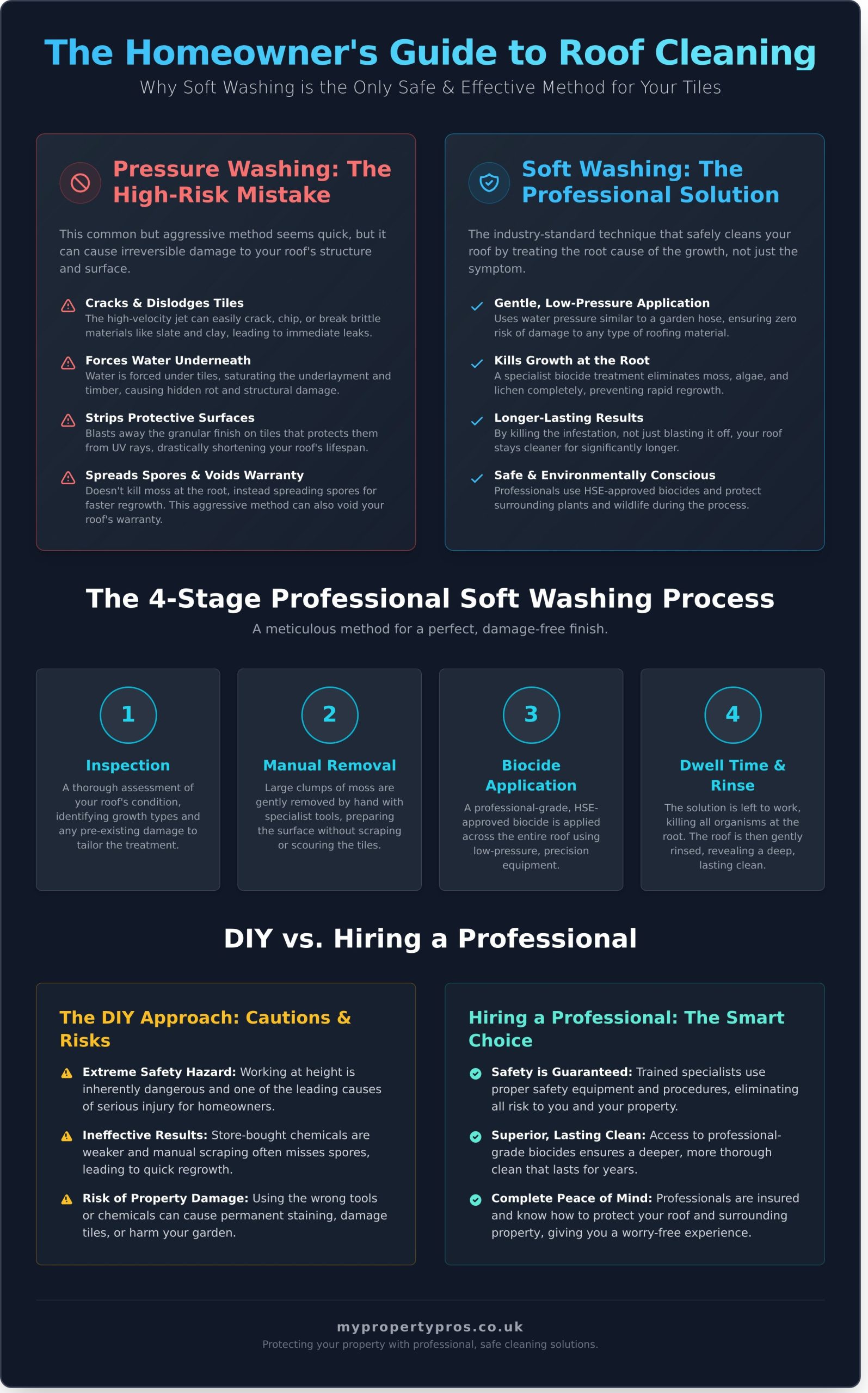
- Forcing water underneath tiles: This can saturate the roofing felt and timber battens, leading to rot and interior leaks that may go unnoticed for years.
- Stripping protective surfaces: Concrete and asphalt tiles have a granular finish that protects them from UV rays. A pressure washer can blast this layer away, drastically shortening the lifespan of your tiles.
- Cracking and dislodging tiles: The sheer force can easily crack, chip, or completely dislodge brittle materials like clay and slate, resulting in immediate vulnerabilities and costly repairs.
The Hidden Damage of High Pressure
The visible damage to tiles is often just the beginning. The aggressive force can tear the underlayment or roofing felt that acts as your roof’s secondary water barrier. Once this is compromised, your property is at risk of slow, hidden leaks that can rot the structural timbers of your roof. Furthermore, pressure washing doesn’t solve the underlying issue; it merely shears off the surface growth without killing the spores. This ineffective method can also void your roof’s warranty, leaving you unprotected against future material failures.
Moss, Algae & Lichen: The Real Enemy
The green, black, and patchy stains on your roof are living organisms-moss, algae, and lichen. They thrive in the UK’s damp climate, and their root systems can degrade tile surfaces over time. Blasting them with high-pressure water often just spreads their microscopic spores across the rest of your roof, guaranteeing a rapid and more widespread return. This is why professionals have moved away from aggressive cleaning. Instead, a professional soft washing process is used, which treats the root cause of the infestation. Understanding this is the key to cleaning your roof safely and effectively.
The Professional Alternative: An Introduction to Soft Washing
While DIY methods can offer a temporary fix, the industry standard for safely and effectively cleaning a roof is a process called soft washing. This professional technique is the definitive answer to how to clean roof tiles without pressure washing. Unlike aggressive jet washing, soft washing uses low-pressure water, similar to a garden hose, to apply a specialist cleaning solution. The goal is not to blast away the surface grime, but to treat the root cause of the problem: the biological infestation of moss, algae, and lichen. To see how this method is applied in practice, you can explore Residential Soft Washing and see the results for yourself.
This approach cleans your roof tiles far more thoroughly, killing the organisms completely and delivering longer-lasting results without the risk of damaging your property.
The Soft Washing Process Step-by-Step
A professional soft washing service is a meticulous, multi-stage process designed to protect your roof while restoring its appearance. Our experts follow these key steps:
- Thorough Inspection: We first assess the condition of your roof, identifying the type of organic growth and checking for any pre-existing damage.
- Manual Moss Removal: Large, thick clumps of moss are gently removed by hand using specialist tools. This prepares the surface for treatment without scraping or scouring the tiles.
- Biocide Application: A professional-grade biocide is applied across the entire roof surface using low-pressure, precision equipment.
- Dwell Time: The solution is left to dwell, allowing it to penetrate deep into the pores of the tiles and kill off all moss, algae, and lichen at the root.
What is a Biocide and Is It Safe?
A professional biocide is a specially formulated, HSE-approved chemical designed to safely eliminate organic growth from exterior surfaces. When applied by a trained specialist, it is perfectly safe for your property and the environment. Our team takes extensive measures to protect surrounding plants, lawns, and downpipes from any runoff. This controlled, professional method stands in stark contrast to using homemade bleach solutions, which can be unpredictable, cause damage to your roof, and pose a risk to your garden and local wildlife.
Benefits Over High-Pressure Methods
Choosing soft washing provides peace of mind and superior, lasting results. The key benefits include:
- No Damage to Tiles: The low-pressure application is gentle on all roofing materials, from delicate clay and slate to concrete tiles. Aggressive jet washing, as noted by the Asphalt Roofing Manufacturers Association, can strip protective granules and damage asphalt roofing materials, leading to costly repairs.
- Kills Growth at the Source: By eliminating spores, soft washing prevents the rapid regrowth common after pressure washing.
- Results That Improve Over Time: After the treatment, the dead organic matter is naturally washed away by rainfall over the following weeks and months, revealing an increasingly clean roof.
See how our professional soft wash service can transform your roof.
Manual Cleaning Methods: A DIY Approach (With Cautions)
We understand that some homeowners prefer a hands-on approach to property maintenance. If you are confident and experienced in working at height and possess the correct safety equipment, a manual clean is a potential option. However, this method for how to clean roof tiles without pressure washing is physically demanding and carries significant risks that should not be underestimated.
Before starting, you must have the right gear. Essential equipment includes a sturdy, correctly-angled ladder, a safety harness securely anchored to a suitable point, non-slip footwear, and protective gloves and eyewear. Attempting this work without these items is extremely dangerous.
Step 1: Manual Moss Removal
The first physical step is to remove the bulk of the moss and algae. Using a long-handled, stiff-bristled brush, gently scrub the growth from the tiles. It is crucial to work from the roof’s ridge downwards to prevent water from being forced up under the tiles. Avoid using metal scrapers or wire brushes, as these can easily scratch, gouge, or crack your roof tiles, leading to costly repairs. For more general guidelines for moss removal, it’s always wise to consult expert resources. Once finished, ensure you completely clear all dislodged debris from your gutters to prevent blockages.
Step 2: Applying a DIY Roof Cleaner
After scraping, you will need to treat the surface to kill the remaining spores. An off-the-shelf roof cleaning biocide, available at most DIY stores, can be applied using a low-pressure garden sprayer. Follow the manufacturer’s instructions precisely regarding dilution, application, and safety precautions. Be aware that an uneven application can sometimes lead to a patchy or streaky finish as the treatment works over the following weeks and months.
The Major Risks of DIY Roof Cleaning
While it may seem straightforward, attempting to clean your own roof is one of the most hazardous DIY jobs. We urge you to consider the following professional warnings:
- Working at Height: The risk of falling is severe and can result in life-changing injuries. A sudden gust of wind, a slippery patch, or a moment of imbalance is all it takes.
- Tile Damage: Roof tiles are not designed to be walked on. Without knowing the correct way to distribute your weight, you can easily crack tiles, compromising your roof’s integrity.
- Chemical Hazards: Improper handling of biocides can cause skin and eye irritation. Runoff can also damage garden plants, stain patios, or harm local wildlife.
- Incomplete Results: A DIY clean often misses deep-rooted spores, meaning moss and algae can reappear much faster than after a professional treatment.
Given the expertise required for a safe and effective outcome, many homeowners find that a professional service provides superior results and, most importantly, complete peace of mind. If you’re reconsidering the DIY route, our trusted team of experts is fully equipped and insured to handle the job safely.
Hiring a Professional vs. DIY: A Realistic Comparison
You’ve learned the methods, but now comes the crucial decision: should you tackle this job yourself or call in the experts? While the DIY approach to how to clean roof tiles without pressure washing can seem tempting, it’s essential to weigh the true costs and risks against the benefits of a professional service. This comparison will help you make a confident and informed choice for your property.
Safety and Equipment
The DIY Challenge: Working at height is one of the most dangerous jobs a homeowner can undertake. It requires not just a ladder, but specialist safety equipment like harnesses, roof ladders, and potentially scaffolding, which can be expensive to buy or hire. A single misstep can lead to severe injury.
The Professional Solution: Our trusted experts are fully trained in working safely at height. They arrive with certified safety systems and are comprehensively insured. This means you bear none of the personal risk, and their public liability insurance covers any unforeseen accidents, giving you complete peace of mind.
Cost vs. Value
The DIY Challenge: The initial outlay for equipment and cleaning products may seem lower. However, hidden costs can quickly mount. A cracked tile or damaged membrane caused by inexperience can lead to leaks and repairs costing hundreds, if not thousands, of pounds. You must also consider the value of your own time-a full weekend or more.
The Professional Solution: While the upfront cost is higher, you are paying for a guaranteed result. There are no hidden fees or risks of expensive mistakes. A professional service is a fixed investment in your property’s health and kerb appeal, saving you time, stress, and potential future repair bills.
Effectiveness and Longevity
The DIY Challenge: Achieving a perfectly uniform clean is difficult without experience. You may end up with a patchy finish, and consumer-grade cleaning products often fail to eliminate all biological spores. This means moss, algae, and lichen can reappear much faster, forcing you to repeat the hard work sooner.
The Professional Solution: Professionals know exactly how to clean roof tiles without pressure washing for maximum impact. They use trade-strength biocidal treatments that not only clean the surface but also eradicate growth at the root, ensuring a consistent, long-lasting finish that protects your roof for years to come.
Ultimately, choosing a professional service is an investment in the safety, value, and longevity of your home. If you want a guaranteed, stress-free result, our team is ready to help. Get a free, no-obligation quote from our trusted experts today.
The Smart Choice for a Clean and Healthy Roof
Protecting your property’s value starts with a well-maintained roof. We’ve seen how high-pressure washing can cause irreversible harm, cracking tiles and forcing water where it doesn’t belong. Understanding how to clean roof tiles without pressure washing is crucial for preserving the integrity and longevity of your home. The safest and most effective professional method is soft washing, which eliminates unsightly growth like moss, algae, and lichen without risking damage.
While DIY methods can offer a temporary fix, for guaranteed results and complete peace of mind, the expertise of a professional is unmatched. At My Property Pros, our fully trained and insured local professionals use proven soft washing techniques to restore your roof’s appearance safely. As part of the UK’s first national exterior cleaning franchise, we bring trusted expertise directly to your doorstep. Protect your most important asset and let the experts handle the hard work.
Ready to see the difference? Request Your Free, No-Obligation Roof Cleaning Quote Today!
Frequently Asked Questions About Cleaning Roof Tiles
How often should I clean my roof tiles?
For most properties in the UK, we recommend a professional roof clean every 3 to 5 years. However, this can vary. Homes in damp areas or with overhanging trees may require more frequent cleaning to prevent heavy moss build-up. Regular maintenance is a proactive way to protect your roof’s integrity, prevent costly repairs, and maintain your property’s kerb appeal. Our experts can provide a tailored recommendation based on your specific situation.
Is soft washing safe for every type of roof tile?
Yes, soft washing is the safest and most effective cleaning method for virtually all types of roof tiles found in the UK, including delicate clay, slate, and concrete. Unlike aggressive pressure washing that can crack tiles and strip protective granules, the low-pressure application poses no risk of damage. Our professional-grade biocides do the hard work, gently removing moss, algae, and lichen. We always assess your specific roof type to ensure the perfect, safe approach.
How much does it cost to clean a roof without pressure washing?
The cost to clean a roof using the soft wash method in the UK typically ranges from £450 to £1,300 for an average-sized home. The final price for your property depends on several key factors, including the overall size and pitch of your roof, the level of moss and algae growth, and ease of access. For a precise and transparent quote tailored to your home’s specific needs, we recommend contacting our team for a free, no-obligation assessment.
Can I use a simple bleach and water solution to clean my roof?
We strongly advise against using a homemade bleach solution. Household bleach can be overly corrosive, potentially damaging the surface of your tiles and underlying membranes. It is also less effective at killing the deep roots of moss and lichen, meaning regrowth will occur much faster. For your peace of mind and guaranteed results, our specialists use professional, pH-balanced biocides that are specifically formulated to be tough on growth but gentle on your property’s materials.
How long will my roof stay clean after a professional soft wash treatment?
A key benefit of professional soft washing is its long-lasting results. You can expect your roof to remain clean and free from significant regrowth for 4 to 6 years, often longer. This is because our treatment doesn’t just remove surface grime; the biocide eliminates algae and moss at the root. This preventative action, a core part of how to clean roof tiles without pressure washing effectively, significantly delays its return and offers superior protection for your home.
Will roof cleaning chemicals damage my garden or plants?
Protecting your garden is a top priority for our professional team. We take comprehensive precautions to ensure your plants and lawn are completely safe during the cleaning process. This includes pre-wetting all surrounding vegetation, using protective sheeting for delicate plants, and carefully managing all runoff. Our trained specialists ensure that the process is fully contained and that your garden remains as beautiful as it was before we arrived, giving you complete peace of mind.