
That growing patch of moss on your roof tiles might seem like a minor cosmetic issue, but for many UK homeowners, it’s a source of genuine concern. Is it causing hidden damage? When does it become a problem that needs professional attention? Answering the question of how often should you clean your roof can feel confusing, especially when you’re worried about the cost, the risk of hiring the wrong company, or even damaging your tiles in the process. You want to protect your property, not face an expensive repair bill for something that could have been prevented.
We understand. This guide is designed to give you clarity and confidence. We will walk you through the key factors that determine the right cleaning schedule for your home, from the type of tiles you have to our unique UK climate. You will learn to spot the early warning signs that your roof needs attention and gain the knowledge to decide when to act. Let us help you protect your investment and enjoy the peace of mind that comes with a well-maintained property.
Key Takeaways
- Discover that the answer to how often should you clean your roof depends on four key factors unique to your UK property, not a one-size-fits-all schedule.
- Learn to spot the crucial visual warning signs from the ground, allowing you to act quickly and prevent costly damage before it takes hold.
- Find a recommended baseline cleaning schedule for common UK roof materials, including slate and tile, to help you create a reliable maintenance plan.
- Understand the dangers of both over-cleaning and under-cleaning to protect your investment and maximise your roof’s lifespan.
The 4 Key Factors That Determine Roof Cleaning Frequency in the UK
When homeowners ask, “how often should you clean your roof?”, there isn’t a single, one-size-fits-all answer. The right frequency depends entirely on your property’s unique circumstances, and it helps to first understand what roof cleaning entails and why it’s necessary. As a reliable guideline for most UK homes, we recommend a professional clean every 2 to 5 years. By understanding the key factors below, you can create a smart maintenance schedule that preserves your home’s appearance and prevents costly, long-term damage.
1. Your Local Environment and Climate
The UK’s consistently damp and mild climate creates the perfect breeding ground for moss, algae, and lichen. Your specific location plays a major role in how quickly these organisms take hold:
- Proximity to Trees: Overhanging branches shed leaves and twigs, which trap moisture and provide nutrients for growth. The added shade also prevents your roof from drying out quickly.
- Coastal Areas: Homes near the sea face salt residue, which can be abrasive and encourage the growth of specific types of hardy lichen.
- Urban Pollution: In cities and near busy roads, pollutants and soot can cause unsightly black streaks and dirt accumulation, which can degrade roofing materials over time.
2. Your Roof’s Material and Age
The type of material covering your home is a critical factor. Some surfaces are far more susceptible to organic growth than others, affecting the need for regular maintenance.
- Porous Tiles: Materials like concrete and clay tiles absorb and hold moisture, making them an ideal haven for moss.
- Natural Slate: While very durable, slate can still develop lichen spots and is prone to moss growth in the gaps between tiles.
- Older Roofs: As a roof ages, its protective surface wears down, becoming more porous and vulnerable to colonisation by moss and algae.
- Asphalt Shingles: These are particularly susceptible to a type of algae called Gloeocapsa magma, which causes the distinctive black streaks you often see.
3. The Pitch and Orientation of Your Roof
The direction your roof faces and its angle significantly impact how much moisture it retains. This is a crucial element in determining how often you should clean your roof.
- North-Facing Roofs: These surfaces receive the least amount of direct sunlight. They stay damp for longer, creating an ideal environment for moss and green algae to thrive.
- Low-Pitched Roofs: A gentle slope means water and debris don’t run off as quickly. This standing moisture and decaying organic matter accelerate biological growth.
- Steep Roofs: While they shed debris more effectively, their steepness can make visual inspections from the ground difficult, potentially hiding problems until they become more serious.
Visual Signs: How to Know When Your Roof Needs Cleaning Now
While having a regular schedule is a great starting point, the most important factor in determining how often should you clean your roof is what you can see. Performing a quick visual inspection from the ground every few months allows you to spot problems before they escalate. These warning signs are more than just cosmetic issues; they are clear indicators of organic growth that can cause significant, long-term damage to your property’s structure.
Addressing these issues promptly is key to protecting your roof’s integrity and extending its lifespan. Don’t wait for a set date on the calendar if your roof is already showing signs of distress.
Significant Moss, Algae, and Lichen Growth
Organic growth is your roof’s primary enemy. Different types pose unique threats, but all can lead to costly repairs if left unchecked. Look for:
- Thick Moss Clumps: Moss acts like a sponge, trapping moisture against your roof tiles. This constant dampness can lead to rot in the underlying structure and, during winter, cause tiles to crack through frost damage.
- Lichen Patches: These hardy, crusty growths have root-like structures that can penetrate and degrade the surface of tiles, creating weak spots.
- Green or Black Algae: Often appearing as discoloured streaks or patches, algae is an early sign that your roof is retaining moisture and providing a fertile ground for more destructive growth like moss.
Black Streaks on the Roof (Gloeocapsa Magma)
Those unsightly black streaks running down your roof are not dirt. They are colonies of a bacteria called Gloeocapsa Magma, which feeds on the limestone filler in asphalt shingles and thrives in the damp UK climate. While they are not as structurally damaging as moss, they severely reduce your home’s kerb appeal and indicate that conditions are right for other organisms. The only way to safely and effectively remove these stains without damaging your shingles is with a professional soft washing service.
Visible Debris and Blocked Gutters
A roof covered in leaves, twigs, and dirt is a clear sign it needs attention. This debris layer not only looks messy but also traps moisture and begins to compost, creating the perfect environment for moss and weeds to grow. This buildup can block the channels designed to let water run off your roof, causing overflows. If you notice your gutters are clogged with moss and sludge, it’s a sure sign it has washed down from a heavily contaminated roof. Blocked gutters can lead to serious water damage to your fascias, soffits, and even your home’s foundations.
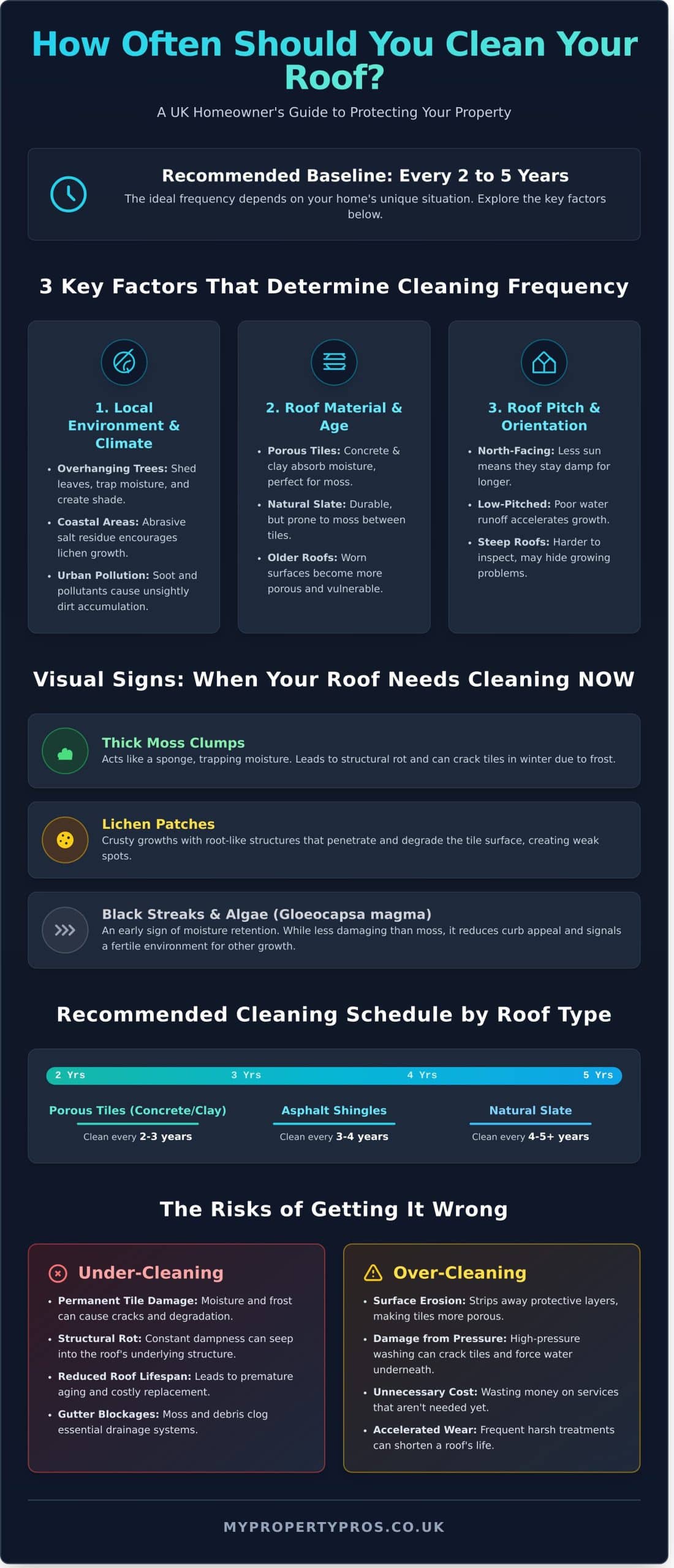
A Recommended Cleaning Schedule for Common UK Roof Types
While every property faces unique environmental factors, we can provide a reliable baseline to answer the question, how often should you clean your roof? Think of this schedule as a starting point for your home maintenance plan. It’s crucial to adjust these timelines based on the visual signs of growth we mentioned earlier, such as visible moss or dark streaks. For complete peace of mind, a professional assessment can provide a more accurate, tailored schedule for your specific property.
Slate & Clay Tiles: Every 3-5 Years
These traditional materials are known for their exceptional durability, but they are not immune to organic growth. Over time, moss, algae, and lichen can build up, potentially trapping moisture and blocking drainage. The primary goal of cleaning is to keep water channels clear to prevent water ingress and protect the tiles. We use a gentle soft washing method, as high-pressure jets can easily crack or dislodge these classic tiles, ensuring a safe and effective clean.
Concrete Tiles: Every 2-4 Years
Concrete tiles are more porous than their slate or clay counterparts, which unfortunately makes them a prime environment for rapid moss and algae colonisation. This build-up not only looks unsightly but can also cause the tile colour to fade prematurely and retain excess moisture, adding weight to your roof structure. Regular, professional cleaning is key to maintaining both the appearance and the long-term structural integrity of your concrete roof.
Asphalt Shingles: Every 3-5 Years
For asphalt shingle roofs, cleaning is mainly focused on treating and preventing the black streaks caused by an alga called Gloeocapsa magma. Beyond aesthetics, moss growth poses a physical threat by lifting the edges of the shingles, making them vulnerable to wind and water damage. It is absolutely essential to never use high-pressure washing on these surfaces, as it can strip away the protective granules and significantly shorten the lifespan of your roof.
Unsure about the best approach for your home? The question of how often you should clean your roof is best answered with an expert eye. For a professional inspection and a tailored maintenance plan, contact the trusted team at My Property Pros today. We ensure your roof is protected for years to come.
The Dangers of Getting It Wrong: Under-Cleaning vs. Over-Cleaning
When it comes to roof maintenance, finding the right balance is essential for protecting your investment. Under-cleaning and over-cleaning both pose significant risks to your roof’s health and longevity. Understanding how often should you clean your roof involves more than just a date on the calendar; it requires assessing the real-world impact of your maintenance schedule to ensure you are extending its life, not shortening it.
Risks of Not Cleaning Your Roof Often Enough
Leaving your roof to fend for itself can lead to a cascade of predictable and expensive problems. What starts as a small patch of moss can quickly escalate into a major structural concern. Key risks include:
- Permanent Tile Damage: Moss and algae trap moisture against the roof surface. In winter, this water freezes and expands, creating micro-cracks in your tiles. This relentless freeze-thaw cycle causes irreversible damage over time.
- Structural Stress: Waterlogged moss is incredibly heavy. This constant, excess weight puts a significant strain on your roof’s underlying structure, which it was not designed to bear long-term.
- Water Ingress & Damp: Debris and moss are inevitably washed into your gutters, causing blockages. This leads to overflowing water that can damage your fascias, penetrate brickwork, and even compromise your home’s foundations.
- Reduced Kerb Appeal: A dirty, stained roof significantly detracts from your property’s appearance and can negatively impact its market value.
Can You Clean Your Roof Too Often?
While neglect is dangerous, being overzealous with cleaning can also cause harm. The primary issue isn’t necessarily the frequency, but the method used. Aggressive, high-pressure washing can strip the protective granular surface from tiles and shingles, drastically shortening their lifespan and voiding warranties. A professional soft washing service, however, uses low-pressure techniques and specialised cleaning solutions that are tough on organic growth but gentle on your roof. Applying a post-clean biocide treatment can also inhibit future growth, extending the time needed between cleans.
Why a Professional Assessment is Your Best Bet
Determining the correct cleaning schedule is best left to the experts. A trained professional can identify subtle signs of damage or potential issues that are invisible from the ground. We will assess your specific roof type, the level of organic growth, and local environmental factors to recommend the safest, most effective cleaning plan. This tailored approach ensures the job is done right, at the right time, giving you complete peace of mind. Protect your property’s most important asset. Request a free, no-obligation roof health check today.
Protecting Your Home Starts from the Top
Ultimately, the answer to how often should you clean your roof is unique to your property. As we’ve covered, factors like surrounding trees, local UK weather patterns, and your specific roof material all play a significant role. Ignoring the visible signs of moss and algae can lead to moisture damage and costly repairs, while over-zealous cleaning can strip protective layers from your tiles. Finding that perfect balance is key to long-term roof health and your peace of mind.
Don’t leave your home’s most important shield to chance. For a professional assessment and a clean that preserves your investment, trust the experts at My Property Pros. As the UK’s only national exterior cleaning franchise, we provide fully insured, local specialists who work to exacting national standards. Our teams are experts in safe and effective soft wash techniques, gently removing harmful growth without damaging your roof. Protect your investment. Get a free, expert quote for your professional roof clean.
Take the guesswork out of roof maintenance and enjoy a cleaner, safer home for years to come.
Frequently Asked Questions
What is the best time of year to get my roof cleaned in the UK?
Our experts generally recommend late autumn as the optimal time for roof cleaning in the UK. This allows for the removal of summer debris, fallen leaves, and algae before the damp winter months encourage further growth. Spring is also a suitable period, as it tackles any moss that has developed over winter. We advise against cleaning in freezing conditions to ensure the safety of our technicians and the integrity of your roof tiles, providing you with complete peace of mind.
How much does professional roof cleaning typically cost?
The cost of professional roof cleaning in the UK can vary, but homeowners can typically expect to pay between £500 and £1,500. The final price depends on several factors, including the size and pitch of your roof, the type of tiles, and the extent of moss and algae growth. For a precise and transparent quote tailored to your property’s specific needs, we recommend contacting our qualified team for a no-obligation assessment. This ensures you receive a fair and accurate price.
Can’t I just pressure wash my roof myself?
We strongly advise against using a high-pressure washer on your roof. This method can be incredibly damaging, stripping the protective granules from tiles, forcing water underneath them, and potentially causing significant leaks. It also poses a serious safety risk. Our professional team uses specialised, low-pressure soft washing techniques that are both safe for your roof’s materials and highly effective at removing contaminants, ensuring a thorough clean without the risk of damage to your property.
How long does a professional roof clean take?
For an average-sized UK home, a comprehensive professional roof clean is typically completed within one to two days. The exact duration depends on the roof’s size, accessibility, and the level of moss and dirt accumulation. Our experienced team works efficiently and safely to minimise disruption to your daily routine. We will always provide a clear timeline for your specific project before any work begins, so you know exactly what to expect from our reliable service.
What is soft washing and why is it better for my roof?
Soft washing is the professional cleaning method our experts use. It involves a low-pressure water system combined with specialised, biodegradable cleaning solutions. Unlike aggressive pressure washing, it gently removes moss, algae, and lichen without harming your roof tiles. The key benefit is that the solution eliminates contaminants at their root, preventing immediate regrowth. This makes it a safer, more effective, and longer-lasting solution for protecting the health and appearance of your roof.
Does cleaning my roof add value to my home?
Absolutely. A clean, well-maintained roof significantly boosts your home’s curb appeal, making a strong first impression on potential buyers. It signals that the property has been cared for, which can increase its perceived value. Understanding how often you should clean your roof and acting on it also helps extend its lifespan by preventing damage from moss and algae. This proactive maintenance is a smart investment that protects your property and can provide a tangible return.